
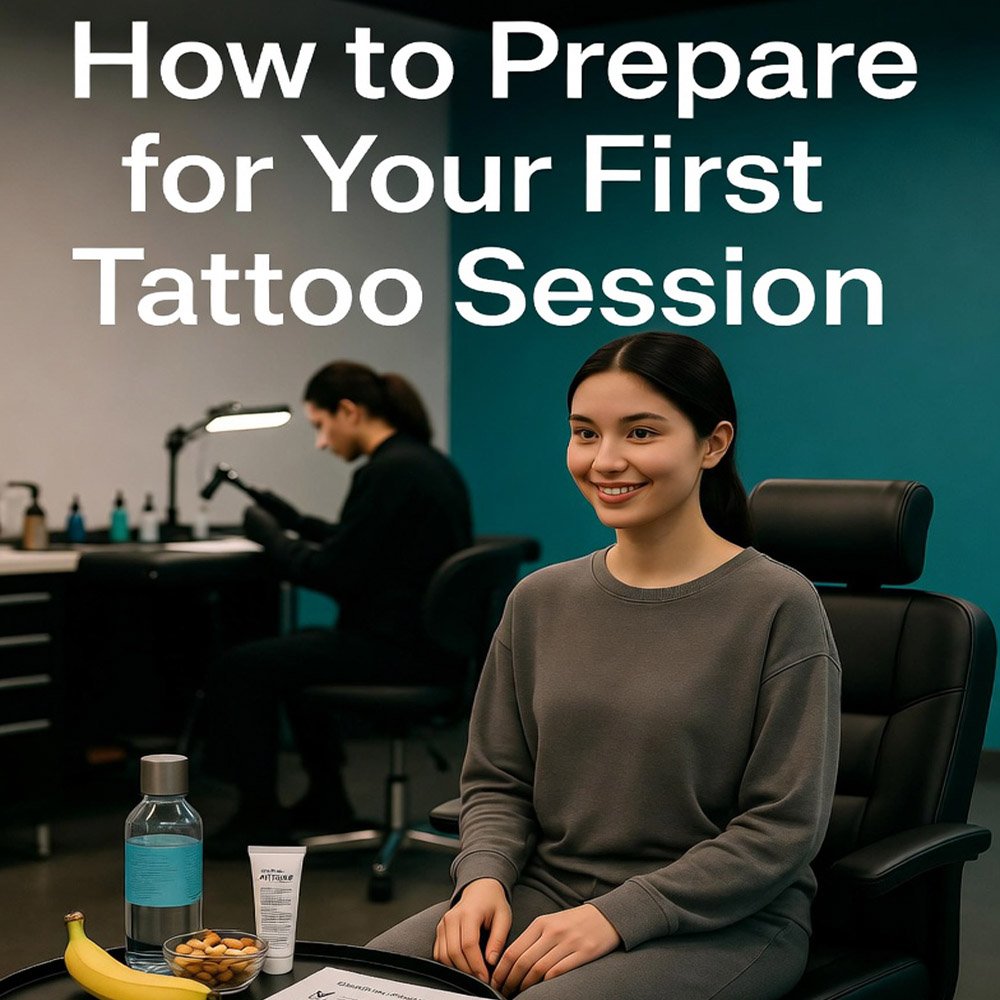
Getting your first tattoo is one of those things that sounds exciting until the appointment is actually booked. Then suddenly, your brain is full of questions:
- What if I can’t handle the pain?
- What if I regret it?
- What should I even do before the session?
I remember sitting in my room the night before my first tattoo, scrolling through Reddit threads at 2 AM, trying to figure out if I should eat, shave, or just panic quietly.
So instead of giving you generic advice, I’ll walk you through what actually matters based on real experience, mistakes, and what I wish someone had told me earlier.
-
Contents
- 1 Don’t Rush the Design (This Is Where Most People Mess Up)
- 2 Choose the Right Artist (Not Just the Cheapest One)
- 3 Sleep and Food Matter More Than You Think
- 4 Wear the Right Clothes (This Is Underrated)
- 5 Understand the Pain (But Don’t Overthink It)
- 6 Talk to Your Artist (Don’t Be Shy)
- 7 Bring Essentials (Think Like You’re Traveling)
- 8 Follow the Aftercare Instructions Exactly
- 9 Don’t Plan Anything Right After
- 10 Accept That It Might Not Be “Perfect”
- 11 Budget for More Than Just the Tattoo
- 12 Your First Tattoo Changes How You See Tattoos
Don’t Rush the Design (This Is Where Most People Mess Up)
My biggest mistake? Choosing a design too quickly.
I picked something that “looked cool” on Instagram. A week later, I wasn’t even sure I liked it anymore but my appointment was already booked.
What I learned:
A tattoo isn’t just about the image. It’s about how it fits you your style, your body, your long-term comfort with it.
What to do instead:
- Sit with your idea for at least 2–3 weeks
- Save references (Pinterest works great for this)
- Notice if you still like it after some time passes
- Think about placement early (this changes everything)
Real-world example:
A friend of mine wanted a forearm tattoo but later realized his workplace required full sleeves. He had to constantly cover it up which turned into a daily annoyance.
-
Choose the Right Artist (Not Just the Cheapest One)
I get it tattoos can be expensive. My first thought was, “Let me find someone affordable.”
Bad idea.
What actually matters:
Every tattoo artist has a style. Some are amazing at realism, others at line work, others at traditional designs.
How I found mine:
- I searched on Instagram using location tags
- Checked portfolios carefully (not just 1–2 posts)
- Looked at healed tattoos, not just fresh ones
What to check:
- Clean, consistent lines
- Symmetry
- How tattoos look after healing
- Reviews from real clients
Mistake to avoid:
Don’t book based on:
- Discounts
- Friends saying “he’s good” without proof
- Random walk-in shops without research
A cheap tattoo that you hate is far more expensive in the long run (cover-ups cost way more).
-
Sleep and Food Matter More Than You Think
This one sounds boring, but it makes a huge difference.
The night before my tattoo, I barely slept. I showed up tired and anxious and the pain felt worse because of it.
Here’s what actually helps:
The night before:
- Get at least 7–8 hours of sleep
- Avoid alcohol (seriously it thins your blood)
On the day:
- Eat a proper meal (not just snacks)
- Drink water
- Bring a sugary drink or chocolate
Why this matters:
When your blood sugar drops, you can feel:
- Dizzy
- Nauseous
- Weak
Tattoo sessions can last hours. You don’t want your body working against you.
-
Wear the Right Clothes (This Is Underrated)
I didn’t think about this at all and I regretted it.
I wore tight jeans for a thigh tattoo. Sitting still for hours? Not fun.
What works best:
- Loose, comfortable clothing
- Something that gives easy access to the tattoo area
- Dark colors (ink stains happen)
Examples:
- Arm tattoo → sleeveless or loose t-shirt
- Leg tattoo → shorts
- Back tattoo → button-up shirt or loose top
You’ll be sitting or lying still for a long time. Comfort is everything.
-
Understand the Pain (But Don’t Overthink It)
Everyone asks: “How painful is it?”
Honestly? It depends on:
- Placement
- Your tolerance
- The length of the session
My experience:
It felt like a constant scratching or burning sensation not unbearable, but definitely uncomfortable.
Areas that hurt more:
- Ribs
- Spine
- Ankles
- Elbows
Easier areas:
- Forearm
- Outer thigh
- Upper arm
Practical tip:
Instead of focusing on the pain, focus on:
- Breathing steadily
- Staying relaxed
Tensing up actually makes it worse.
-
Talk to Your Artist (Don’t Be Shy)
I made the mistake of staying quiet because I didn’t want to seem annoying.
Later, I realized tattoo artists actually prefer when you communicate.
What you should ask:
- Can we adjust the size?
- How will this age over time?
- Does this placement work long-term?
During the session:
If something feels off:
- Say it
- Ask for a break
- Clarify any concerns
This is your body not the time to be polite at your own expense.
-
Bring Essentials (Think Like You’re Traveling)
A tattoo session isn’t just “sit and go.” It’s more like a mini endurance event.
What I now always bring:
- Water bottle
- Snacks (protein bars, chocolate)
- Earphones or headphones
- A power bank
- Something to distract yourself (music, podcast, downloaded show)
Real example:
During my second tattoo, I brought a playlist and a podcast. It made the time go by much faster compared to my first session where I just stared at the wall.
-
Follow the Aftercare Instructions Exactly
This part is where many people get lazy and it shows in the final result.
Your tattoo is basically an open wound.
My mistake:
I once thought, “Skipping moisturizer for a day won’t matter.”
It did. The healing became uneven, and the tattoo looked dull in one area.
Basic aftercare steps:
- Keep the bandage on for the recommended time
- Gently wash with mild soap
- Pat dry (don’t rub)
- Apply a thin layer of recommended ointment
- Avoid:
- Direct sunlight
- Swimming
- Scratching
Healing timeline:
- First few days → redness and soreness
- Week 1–2 → peeling (like a sunburn)
- Week 3+ → settling into skin
Consistency here directly affects how your tattoo looks years later.
-
Don’t Plan Anything Right After
I made the mistake of scheduling dinner plans right after my first tattoo.
Bad decision.
Why you should avoid plans:
- You might feel tired
- The area could be sore
- You’ll need to protect the tattoo
Better idea:
- Go home
- Relax
- Let your body recover
Treat it like a recovery day, not a normal one.
-
Accept That It Might Not Be “Perfect”
This is something I wish someone told me upfront.
No tattoo is 100% flawless and that’s okay.
Skin isn’t paper:
- It moves
- It stretches
- It heals differently
What matters:
- Overall look
- How it fits your body
- How you feel about it
Real perspective:
After my first tattoo healed, I noticed tiny imperfections. At first, it bothered me. Over time, I stopped noticing them completely.
-
Budget for More Than Just the Tattoo
The price you see isn’t always the final cost.
Additional things to consider:
- Tip for the artist
- Aftercare products
- Touch-ups (sometimes needed)
Example:
A tattoo might cost $100, but with:
- Tip
- Creams
- Travel
You might spend $130–150 total.
Planning for this avoids last-minute stress.
-
Your First Tattoo Changes How You See Tattoos
Something interesting happens after your first session.
You go from:
“I’m nervous about getting one”
To:
“I’m already thinking about my next one”
Why?
Because the unknown disappears.
You understand:
- The process
- The pain
- The healing
And it becomes much less intimidating.
A Few Final Thoughts
Your first tattoo isn’t just about ink it’s an experience you’ll remember for years.
If you prepare well:
- You’ll feel more confident
- The session will be smoother
- The result will be something you’re proud of
If you rush it or ignore the basics, small mistakes can turn into long-term regrets.
Take your time. Ask questions. Eat properly. Choose wisely.
And when you finally sit in that chair, you’ll realize something surprising it’s not as scary as you imagined, just something new.